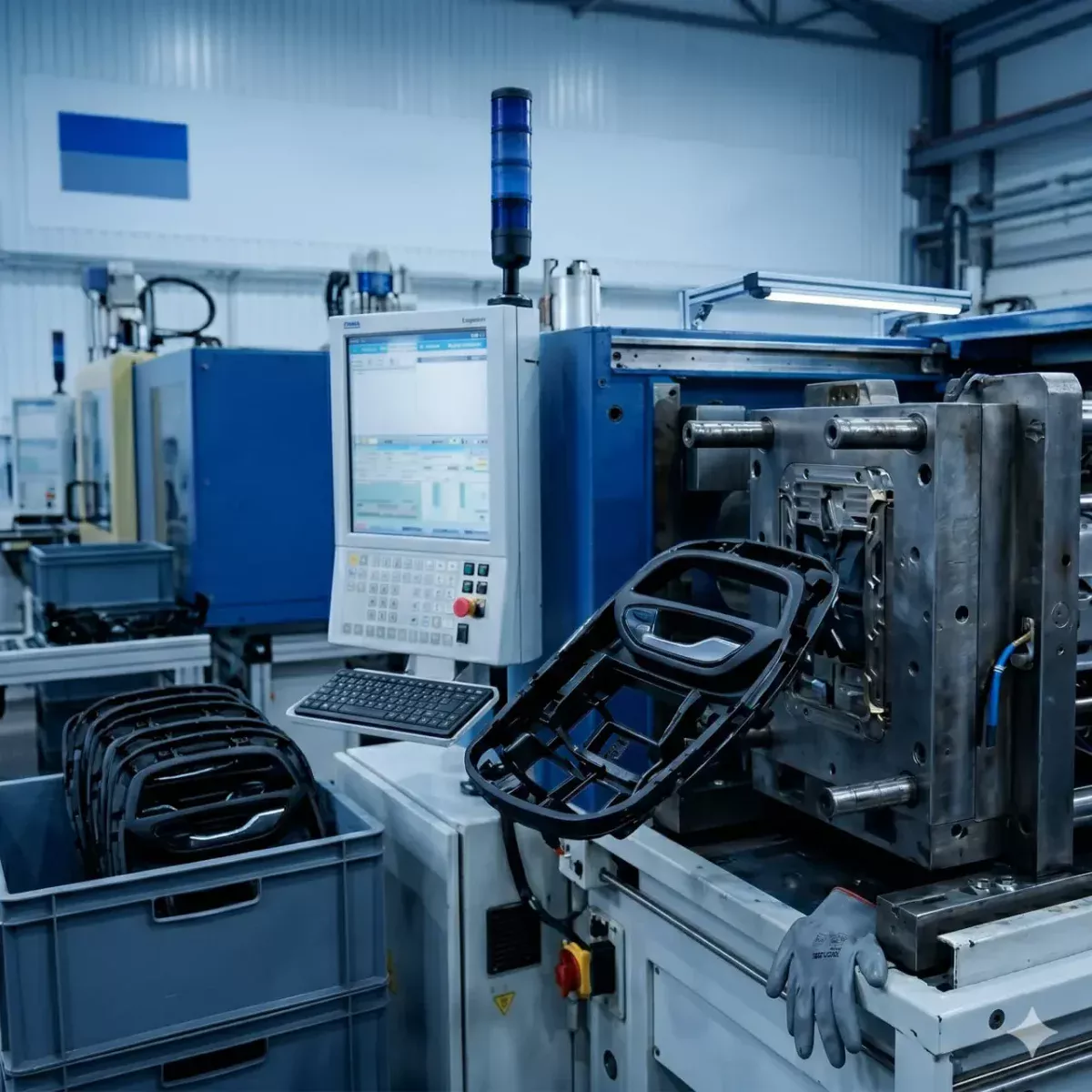

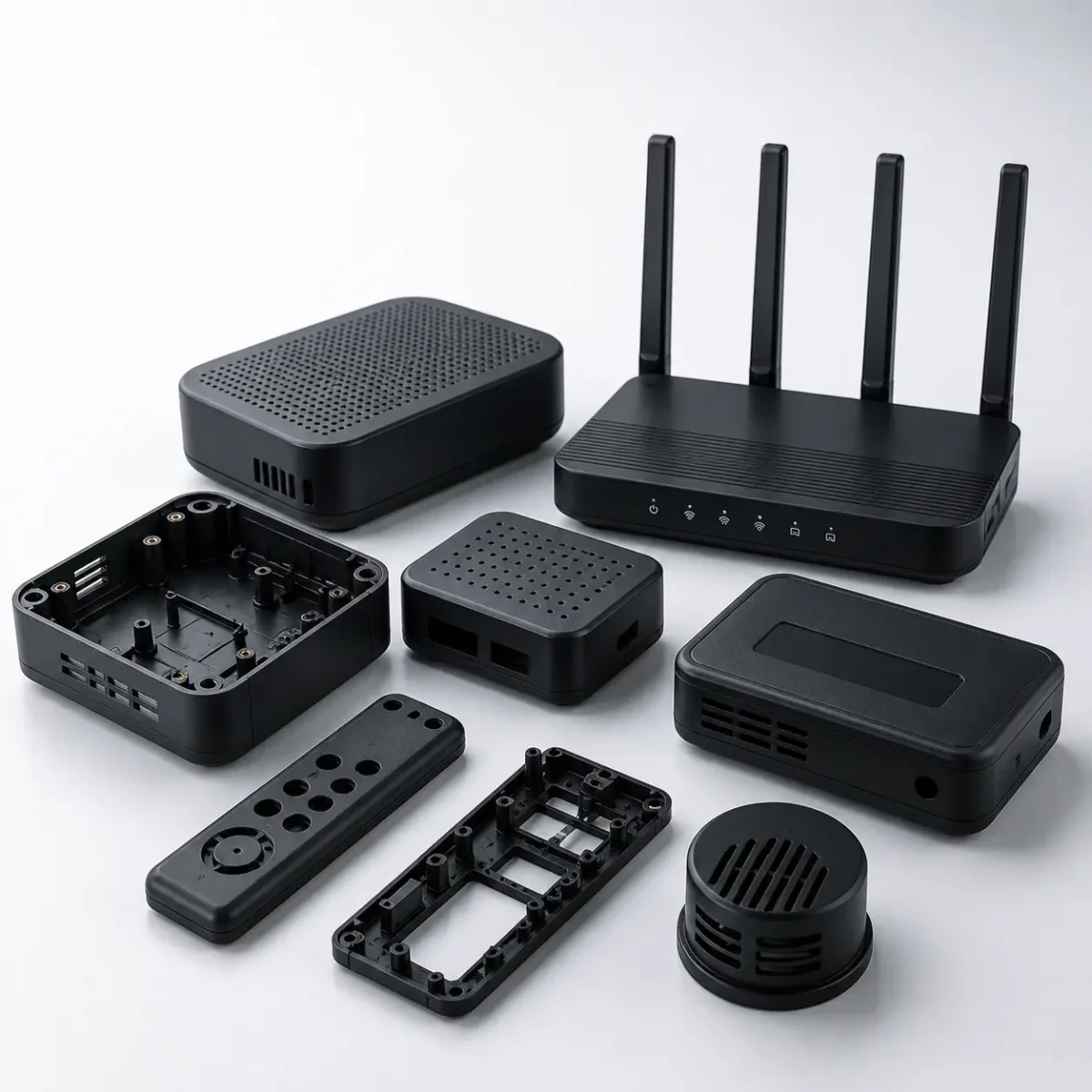


The manufacture of plastic components for consumer electronics requires high precision and consistent quality. Replast offers a full-cycle service — from product analysis to mass production — ensuring predictable results and scalability
What do we offer for consumer electronics?
- Full cycle: R&D → prototyping → mass production
- Rapid start-up of production
- Checking the repeatability of part geometry
- Consistency in quality across batches
- Optimisation of production costs
- Scaling to accommodate growing volumes
- Working with OEMs and Tier 1/Tier 2 suppliers
What parts can we manufacture?
- Electronic device enclosures
External enclosures for consumer electronics: power supplies, controllers, smart devices, control modules. - Internal plastic components
Structural elements inside devices: PCB holders, guides, and insulating parts. - Fasteners and fastening devices
Functional assembly components: clips, latches, snap-fit connections, quick-fit components. - Interface elements (buttons, panels)
Control buttons, front panels, and decorative and functional trim for the user interface. - Protective enclosures and housings
Components designed to protect electronics from mechanical impact and external factors: enclosures, covers, protective elements. - Components for household appliances
Plastic parts for appliances: housing components, functional assemblies, and internal modules for kitchen and small household appliances.
Materials
When manufacturing plastic components for consumer electronics, it is important to select the right material based on the requirements for strength, precision and performance. We use tried-and-tested engineering polymers that ensure consistency in mass production and compliance with technical specifications.
- ABS (acrylonitrile butadiene styrene)
A versatile thermoplastic for electronic enclosures and internal components. It combines strength, impact resistance and optimal cost for mass production. - Polycarbonate (PC)
A highly impact-resistant material with excellent dimensional stability. Suitable for transparent or functional parts where precision and durability are important. - Elastomers (TPE/TPU)
Flexible materials for components requiring shock absorption or tactile feedback. Used for buttons, seals and ergonomic elements. - Polypropylene (PP)
A lightweight and chemically resistant material for functional parts. Suitable for components subject to repetitive loading. - Polyamide (PA / Nylon)
A material with high mechanical strength and wear resistance. Used for technical components subject to high loads.
What are the advantages of Replast?
The mass production of plastic components for the electronics industry requires not just manufacturing, but also cost control and process stability.
- 3–10x cost savings — production optimisation compared to alternative methods
- Quick Start — reducing time to market
- Repeatability — consistent geometry in every batch
- Scaling — from small batches to large volumes without compromising on quality
- Process control — the expected outcome in mass production
Stages of cooperation:
- Analysis of technical documentation or a sample
- Calculation of the economic model
- Agreement on the technical specifications
- Design and manufacture of moulds
- Test castings
- Start of mass production
- Long-term supply contract
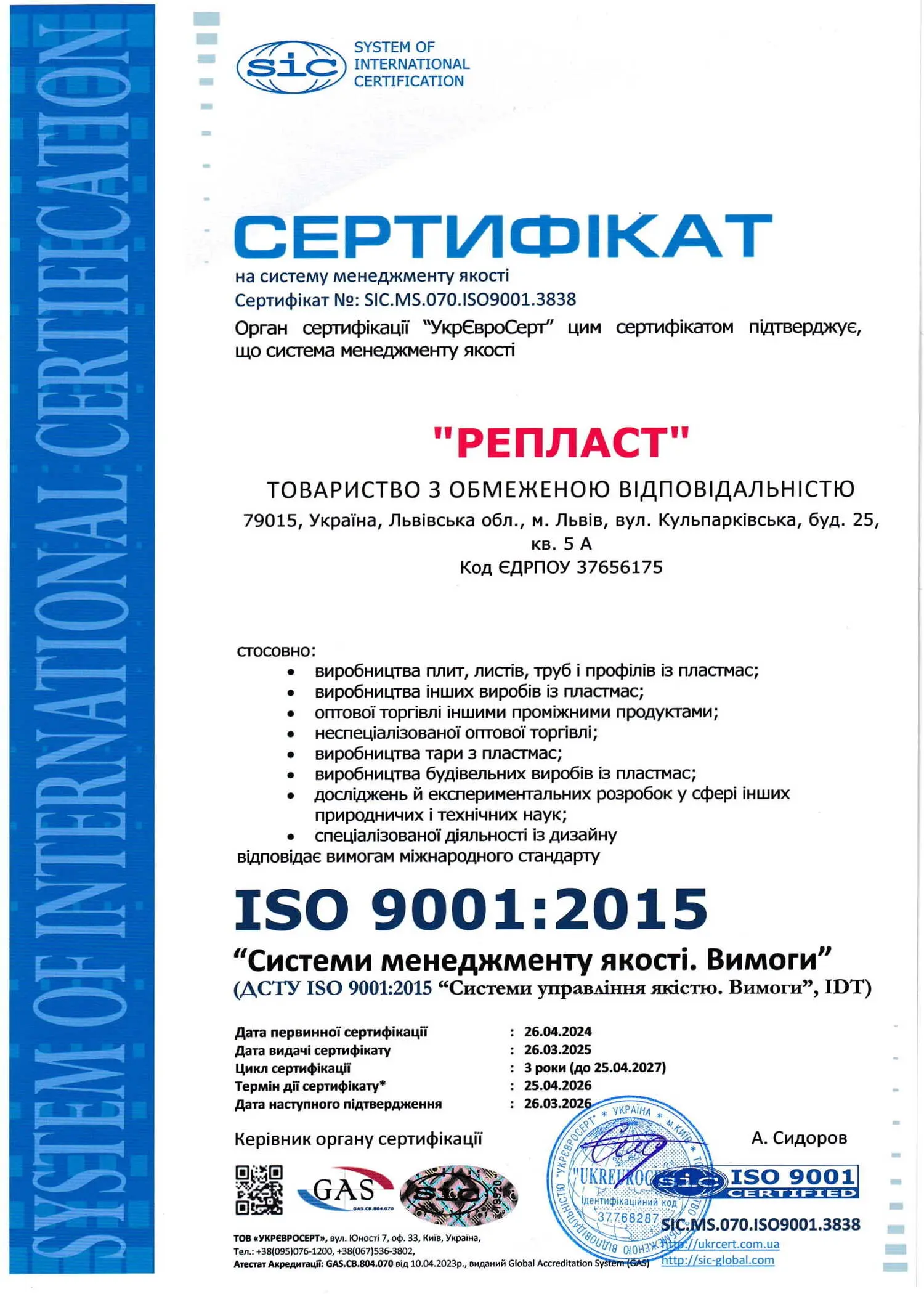
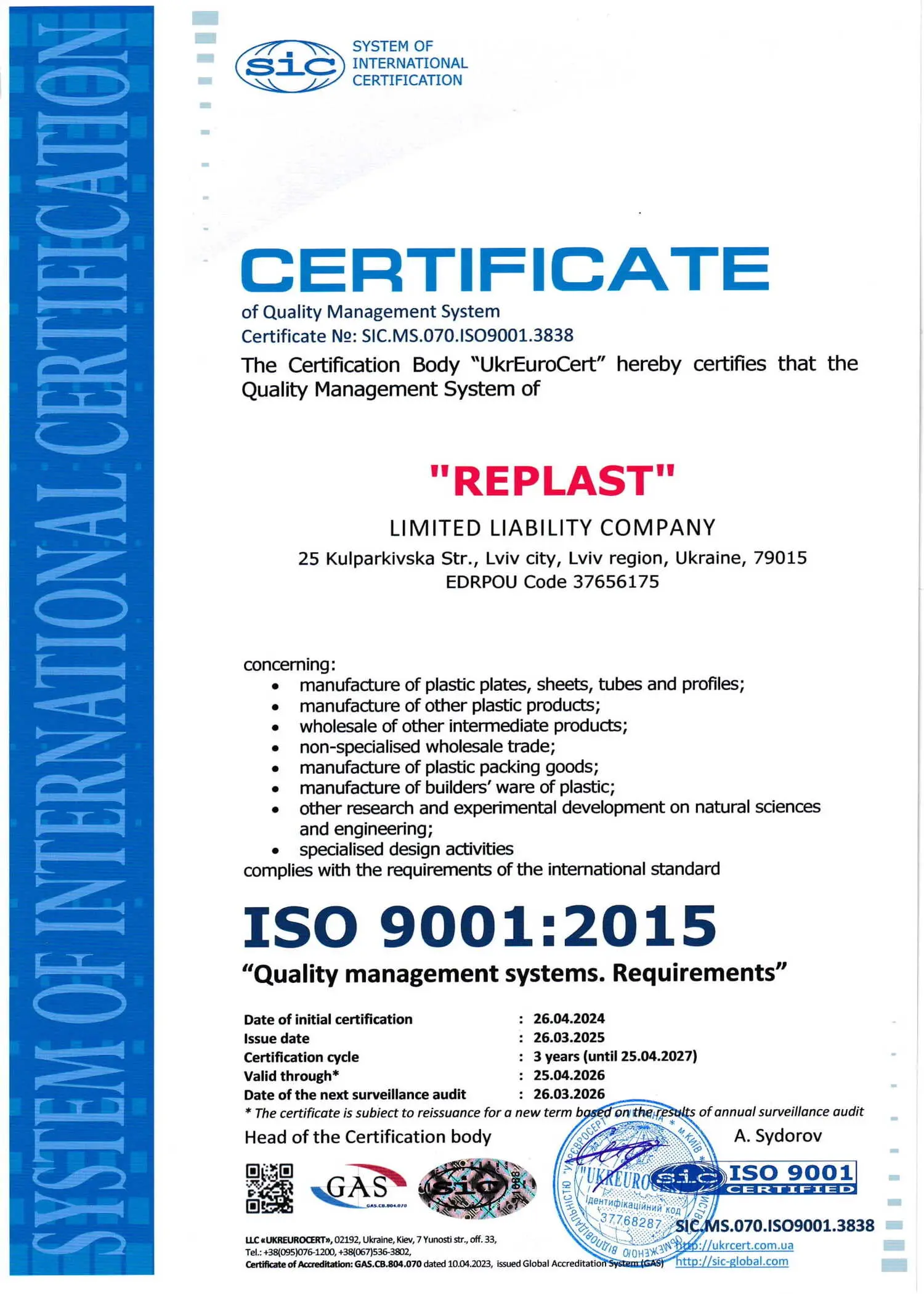
Quality management system:

ISO
Process standardisation and quality control

5S
Organisation and discipline in production

Kaizen
Continuous process improvement

SPC
Data-driven parameter control

Real-life case studies that work
The shift from imports to local production (electronic components)
The challenge:
The client imported plastic components for an electronic product from China, which created critical constraints for the business:
- Delivery time: 60–90 days
- large minimum order quantities (from 10,000 units)
- funds tied up in inventory
- inconsistent quality between batches
- lack of control over production
What was critical:
- reducing time-to-market
- quality control of components
- flexibility in batch production
- reduction in the financial burden
Solution:
- design optimisation for die casting (DFM)
- design and manufacture of moulds
- launch of local mass production
- standardisation of the process to ensure consistent quality
Result:
- Reduced production lead times:
from 60–90 days → to 3–5 days per batch - Price reduction:
~145 UAH → ~75 UAH (saving ~48%) - scaling up production:
up to 170,000 parts per month - якість:
- зниження браку з ~8% до 0%
- повна повторюваність деталей
- операційні ефекти:
- відсутність перевантаження складу
- виробництво “під потребу”, а не “на склад”
- повний контроль над виробництвом
FAQ
What production volumes are possible?
Do you help with the design work?
What is the timeline for starting production?
How is consistent quality ensured?
Do you work with international clients?
Why is Replast the best choice for manufacturing automotive plastic parts?
Quality
Strict multi-stage quality control in the manufacture of components
Savings
Reducing production costs and optimising manufacturing expenses
Speed
Short production lead times and a rapid response to customer requirements
Stability
Minimal defect rates, batch consistency and control of production parameters
Scaling
Readiness for stable mass production and increased output without compromising on quality
Get in touch
Customer reviews