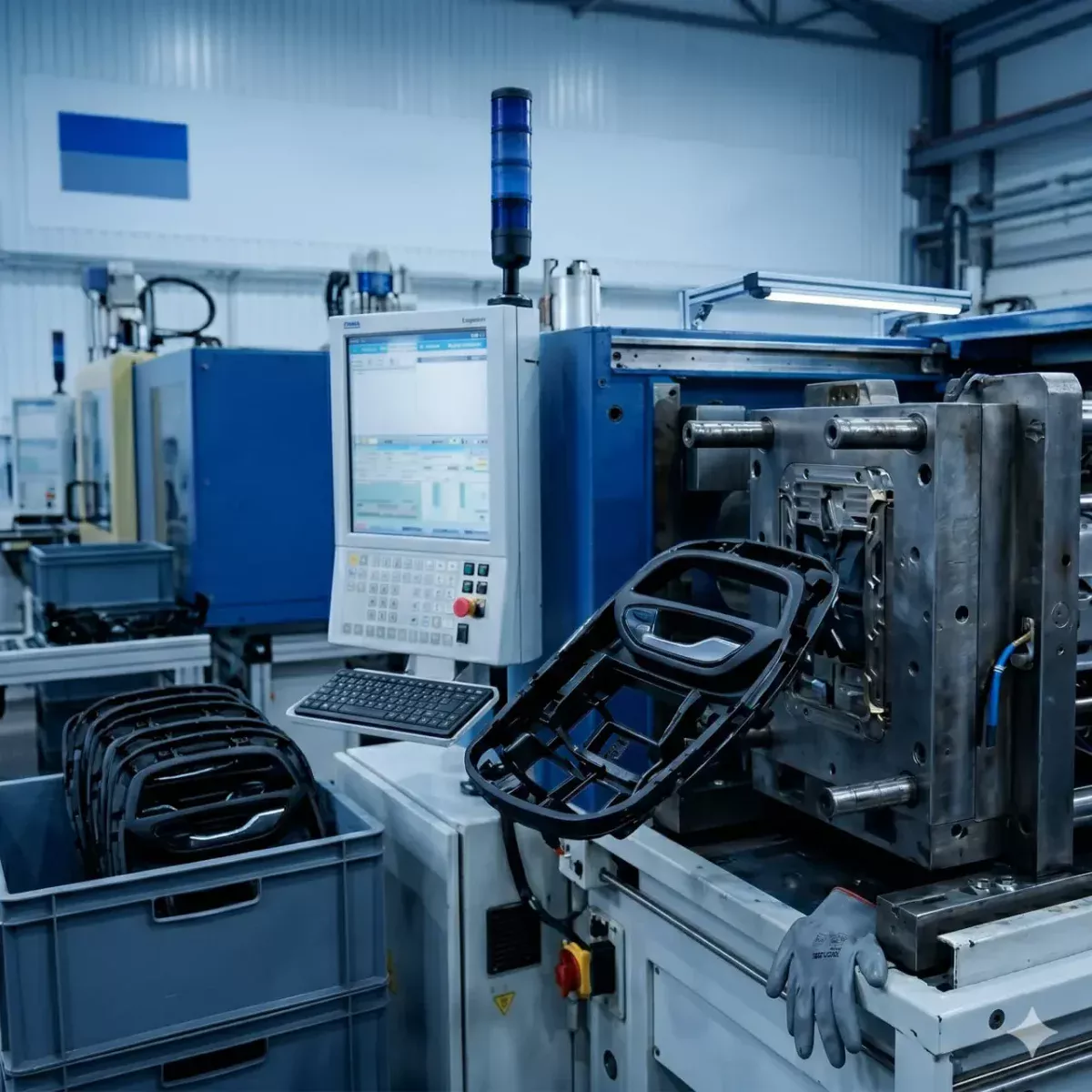

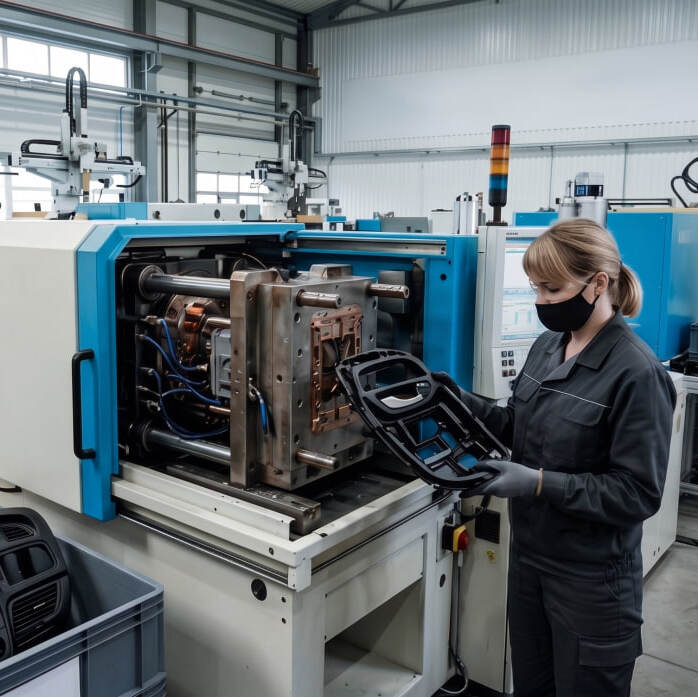

The manufacture of plastic components for the automotive industry requires consistent quality, inter-batch control and cost management. Replast offers a full-cycle service — from component analysis and mould design to the mass production of automotive components, complete with technical support.
We work with OEMs, Tier 1 and Tier 2 suppliers, providing high-volume production of plastic components for the automotive industry, offering cost-effective solutions, consistent quality and the ability to scale production to meet demand.
Die-casting is a solution for the manufacture of automotive components where the following factors are important:
– geometric consistency
– quality control between batches
– production speed
– cost optimisation
What do we offer the automotive industry?
– Full production cycle: from component analysis to mass production
– Design and manufacture of moulds
– Design optimisation (weight reduction, material selection)
– Mass production of plastic components
– Statistical Process Control (SPC)
– Technical support throughout the product lifecycle
– Production planning based on your forecasts
What automotive parts can we manufacture?
Focus — mass-produced parts with high requirements for dimensional stability and repeatability.
Cabinet components:
– technical plastic components
– fasteners
– functional components made from engineering polymers
– components for electronics and internal systems, etc.
Materials
At Replast, we work with engineering plastics that ensure stable geometry, high strength and compliance with the technical requirements of mass production. In particular, our production utilises polyamide, polycarbonate and glass-filled materials, which enable us to manufacture components with enhanced wear resistance, heat resistance and mechanical stability.
The material is selected on a case-by-case basis to meet the product’s requirements, taking into account the loads, operating conditions and the specific nature of the industry.
Proven effectiveness through real-world case studies
Case study: Switching from 3D printing to injection moulding
The client had been using 3D printing but was unable to meet the required production volume of 30,000 units per month. After switching to injection moulding, mass production was achieved.
| Indicator | It was (3D printing) | Steel (die-casting) |
|---|---|---|
| Unit price | 400 UAH each | 80 UAH each |
| Production time | 10 hours per part | 40 seconds per cycle |
| Defect rate | 23% | 0% |
Result:
- Savings: 9,600,000 UAH/month
- Reduction in production costs: -80%
- Payback period for the mould: 0.5 months
Stages of cooperation
- Analysis of technical documentation or a sample
- Calculation of the economic model
- Agreement on the technical specifications
- Design and manufacture of moulds
- Test castings
- Start of mass production
- Long-term supply contract
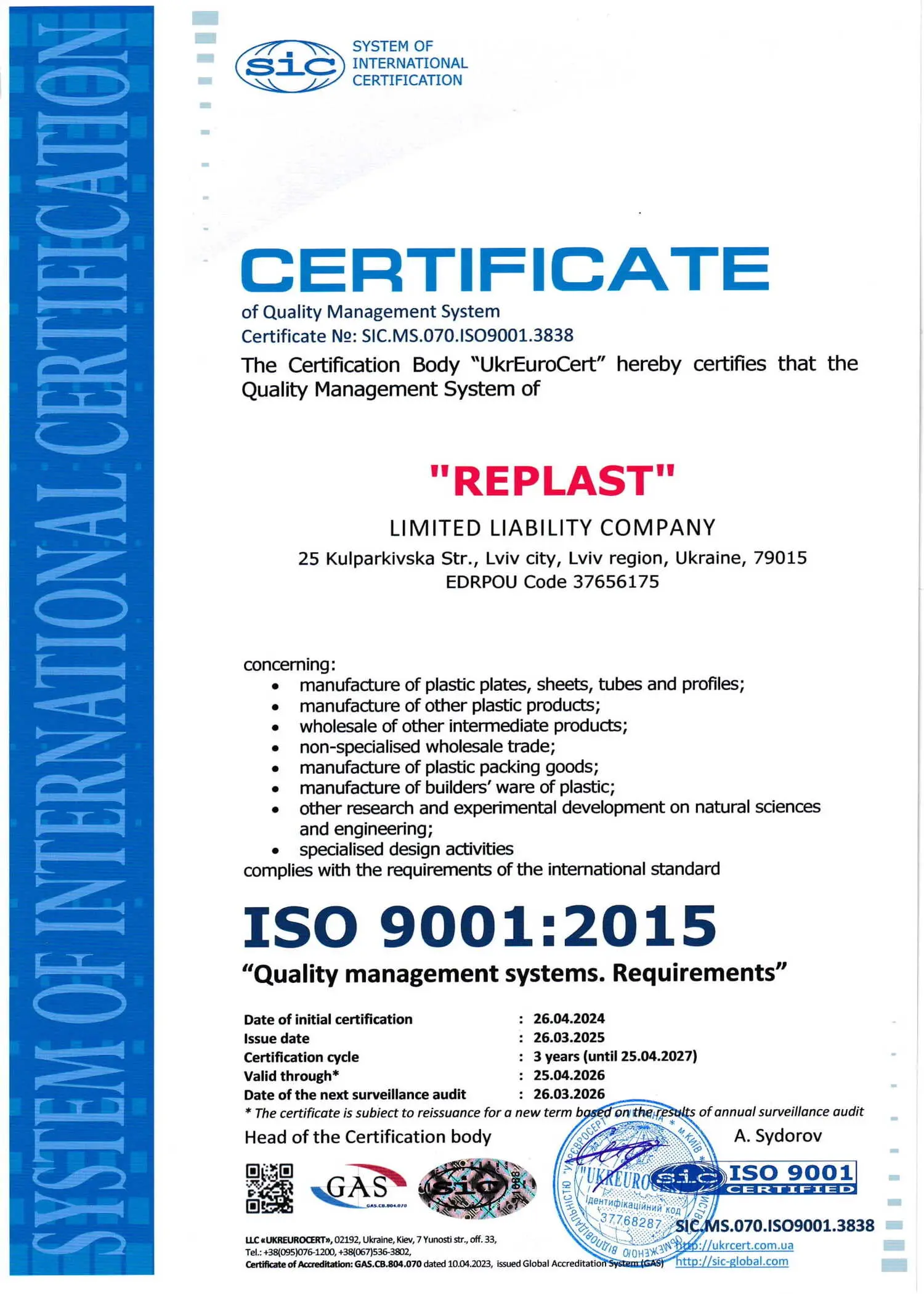
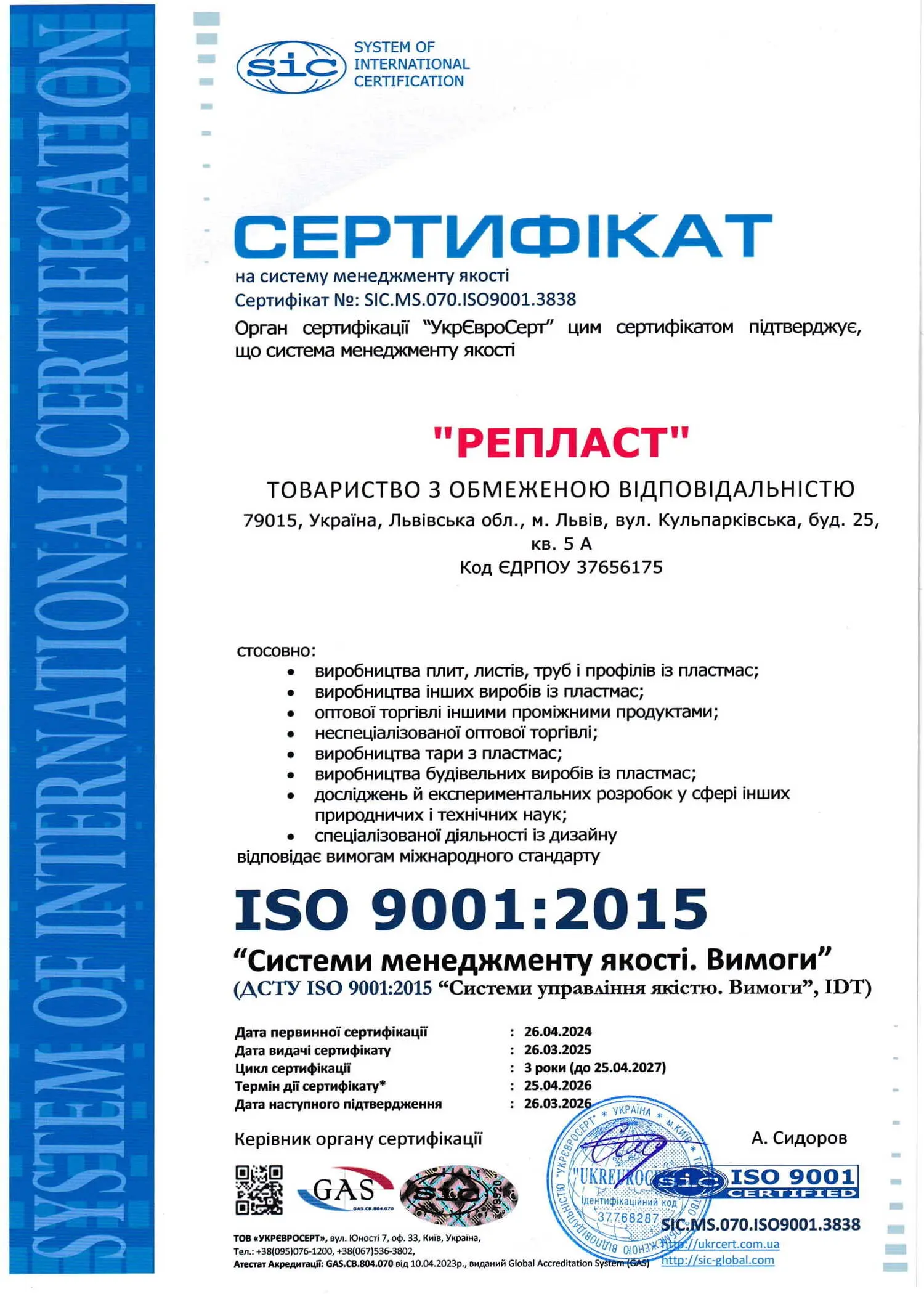
Quality management system

ISO
Process standardisation and quality control

5S
Organisation and discipline in production

Kaizen
Continuous process improvement

SPC
Data-driven parameter control
Frequently Asked Questions
Why die-casting for the automotive industry?
Die-casting is the ideal solution for the automotive industry when:
- Volume: from 5,000 units/month
- The parts must have consistent dimensions
- Consistency between batches
- Scaling is required without compromising profitability
Is it possible to optimise the existing part?
Yes, engineering analysis and geometric optimisation are carried out.
How is quality controlled?
Through the monitoring of casting parameters and SPC.
What is the launch date?
It depends on the complexity of the mould, after which mass production begins.
Is contract manufacturing possible without investment?
Yes, there are various models of cooperation available.
What is the minimum order quantity?
From 5,000 items per month.
Why is Replast the best choice for manufacturing automotive plastic parts?
Quality
Strict multi-stage quality control in the manufacture of components
Savings
Reducing production costs and optimising manufacturing expenses
Speed
Short production lead times and a rapid response to customer requirements
Stability
Minimal defect rates, batch consistency and control of production parameters
Scaling
Readiness for stable mass production and increased output without compromising on quality
Get in touch
Customer reviews